

Stop Wasting Money on Tax Preparation Mistakes: 5 Quick Planning Hacks That Boost Your Refund
- smithtaxesandmore
- Nov 25, 2025
- 5 min read
Nobody likes leaving money on the table, especially when it comes to taxes. Yet every year, millions of taxpayers make costly mistakes that either shrink their refunds or create unnecessary headaches with the IRS. The good news? Most of these errors are completely avoidable with a little planning and know-how.
Whether you're a seasoned tax filer or someone who dreads April 15th, these five strategic hacks will help you maximize your refund while steering clear of the most common (and expensive) tax preparation pitfalls. Let's dive in.
Hack #1: Start Early and Get Your Financial House in Order
The biggest mistake taxpayers make isn't mathematical: it's procrastination. Waiting until the last minute to gather documents and file your return is like trying to cook a five-course meal in 20 minutes. You're bound to miss something important.
Here's what smart tax planning looks like: Start organizing your financial documents in January, not March. Create a simple filing system (even a shoebox works) and toss in every tax-related document as it arrives. This includes:
All W-2s and 1099s from employers and clients
Bank statements showing interest earned
Investment statements with dividend information
Receipts for charitable donations
Medical expense receipts
Business expense documentation
Mortgage interest statements
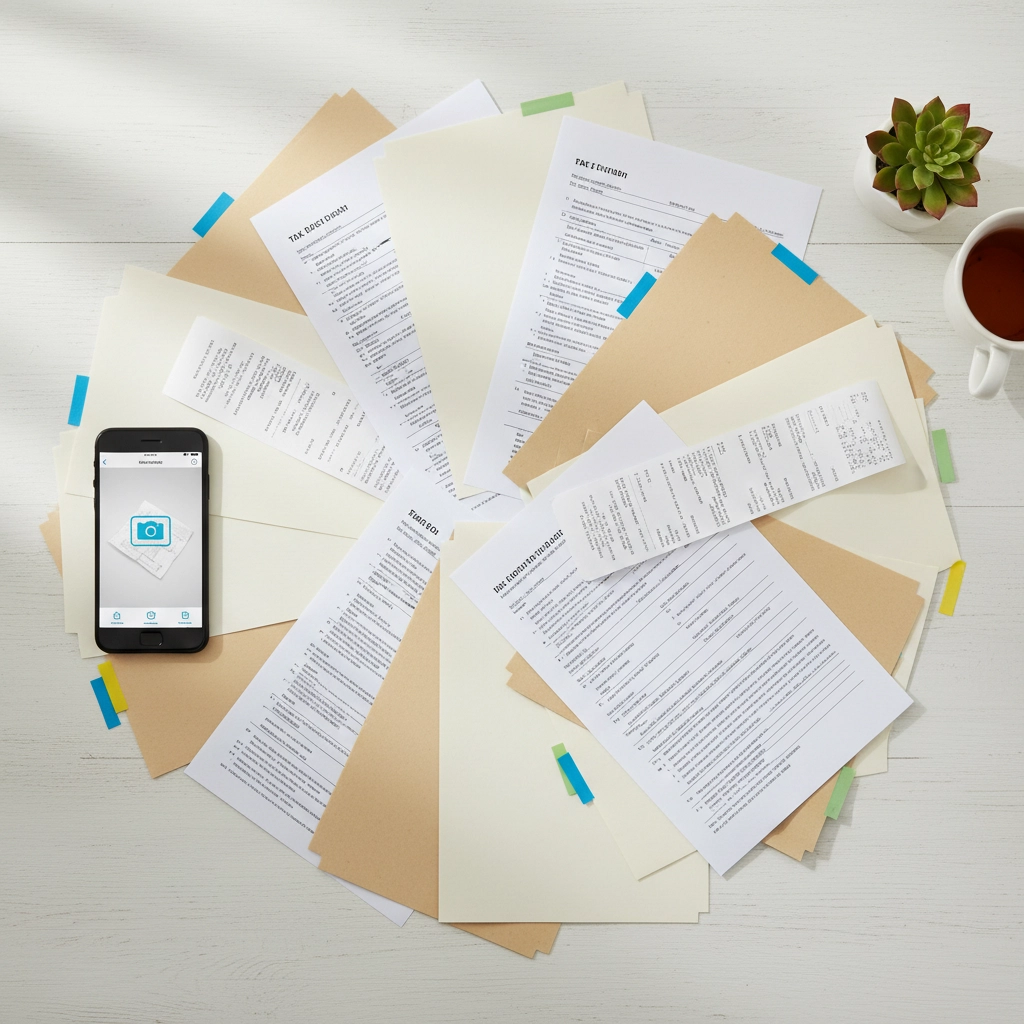
The beauty of this approach? When tax season arrives, you're not scrambling to find that one crucial document. You're also less likely to miss deductions because everything's right in front of you. I've seen clients discover hundreds of dollars in overlooked deductions simply by taking the time to organize properly.
Pro tip: Use a smartphone app to photograph receipts throughout the year. This creates a digital backup and makes organization much easier when filing time comes around.
Hack #2: Track Every Deduction Throughout the Year (Not Just at Tax Time)
Here's a reality check: The IRS won't do you any favors. If you forget to claim a deduction or credit you're entitled to, they won't call you up to let you know. That money stays in their pocket, not yours.
The solution is to track deductible expenses as they happen, not when you're preparing your return. This includes:
For Everyone:
Charitable contributions (even small cash donations count)
Medical expenses that exceed 7.5% of your income
State and local taxes paid
Mortgage interest and property taxes
For Business Owners and Freelancers:
Home office expenses
Business travel and meals
Professional development and education
Equipment and supply purchases
Professional memberships and subscriptions
For Parents:
Child and Dependent Care Credit eligibility
Education-related expenses and credits
Health Savings Account contributions
Many taxpayers miss out on legitimate deductions simply because they don't keep track throughout the year. A $50 charitable donation here, a $100 business expense there: it adds up quickly. Keep a running tally in a simple spreadsheet or use tax software that tracks expenses year-round.

The key is understanding what qualifies. For instance, did you know that if you drove your personal vehicle for charitable work, you can deduct 14 cents per mile? Or that job search expenses in your current field are often deductible? These aren't huge individual amounts, but they compound over time.
Hack #3: Adjust Your Withholding Strategy for Maximum Cash Flow
Getting a massive tax refund feels great, right? Actually, it shouldn't. A large refund means you've been giving the government an interest-free loan all year with your own money. Meanwhile, you could have been using that cash for investments, paying down debt, or building an emergency fund.
Here's how to optimize your withholding:
If you typically get large refunds: You're having too much withheld from your paychecks. Use the IRS Withholding Estimator to calculate the right amount, then submit a new W-4 to your employer to reduce your withholding.
If you typically owe money: You're not having enough withheld. Increase your withholding to avoid penalties and the stress of owing money at tax time.
The sweet spot: Aim to either get a small refund (under $500) or owe a small amount (under $1,000). This means your withholding is dialed in correctly.
For self-employed individuals, this means making accurate quarterly estimated tax payments. Don't wait until year-end to settle up with the IRS: you'll face penalties and interest charges that eat into your bottom line.
Hack #4: Double-Check Everything Before You Hit Submit
Simple errors cause big problems. The IRS processes over 150 million tax returns each year, and a significant percentage contain basic mistakes that delay refunds or trigger audits. Most of these errors are completely preventable with a careful review.
Critical items to verify:
Names and Social Security numbers (including dependents)
Bank account numbers for direct deposit
Routing numbers for your bank
Basic math calculations
Filing status selection
Signature and date

Here's a horror story that happens more often than you'd think: A taxpayer accidentally transposes two digits in their bank account number. Their refund gets deposited into someone else's account, and it can take months to recover the money: if they ever get it back at all.
Electronic filing helps catch many errors automatically, but don't rely on software to catch everything. Review your return line by line before submitting. If something looks off or doesn't make sense, dig deeper. Trust your instincts.
Pay special attention to your filing status. This single choice affects your tax brackets, standard deduction amount, and eligibility for certain credits. Filing as "Single" when you qualify for "Head of Household" could cost you hundreds or even thousands of dollars.
Hack #5: Embrace Electronic Filing with Direct Deposit
Paper filing is so last century: and it's costing you time and money. Electronic filing is faster, more accurate, and gets you your refund weeks sooner than mailing a paper return.
Why e-filing wins:
Built-in error checking catches mistakes before submission
Direct deposit gets your refund in 8-21 days vs. 6-8 weeks for paper returns
Electronic confirmation proves the IRS received your return
Less chance of returns getting lost in the mail
Automatic calculations reduce math errors
When you combine e-filing with direct deposit, you create the fastest, most secure way to get your refund. Just make absolutely sure your bank account information is correct: double and triple-check those routing and account numbers.
For even faster processing, file as early as possible. The IRS typically starts accepting returns in late January, and early filers often see their refunds within days of acceptance.
The Bottom Line: Planning Pays Off
Tax preparation doesn't have to be stressful or expensive. With a little planning and attention to detail, you can maximize your refund while avoiding the costly mistakes that trip up millions of taxpayers each year.
Remember, the IRS puts the responsibility squarely on your shoulders. Whether you prepare your own return or hire a professional, you're ultimately responsible for its accuracy. Take the time to do it right, and your bank account will thank you.
Need help implementing these strategies or want professional guidance with your tax situation? Contact us at Smith Taxes & More. We specialize in helping individuals and businesses maximize their tax benefits while ensuring full compliance with current tax laws.
Start implementing these hacks today, and next tax season will be your most profitable yet.
Comments