

Are Annual Tax Filings Dead? Why Smart Business Owners Are Switching to Year-Round Tax Planning
- smithtaxesandmore
- Dec 20, 2025
- 5 min read
Let's clear something up right away: annual tax filings aren't dead. They're still legally required, and the IRS isn't going anywhere. But here's what is happening: smart business owners are realizing that waiting until March to think about taxes is like trying to lose weight by skipping meals the week before vacation. It's too little, too late.
The real shift happening across America isn't about ditching annual filings. It's about adding a year-round tax planning strategy that works alongside your annual filing. And honestly? It's one of the smartest business moves you can make.
Tax Preparation vs. Tax Planning: What's the Difference?
Most business owners confuse these two completely different services, and I don't blame them. The tax industry hasn't done a great job explaining the difference.
Tax preparation is what happens every spring. You gather your receipts, hand them to your accountant (or plug them into software), and file your return. It's reactive: you're reporting what already happened last year. There's no going back to change anything.
Tax planning is the complete opposite. It's proactive, happens year-round, and focuses on legally minimizing your tax burden before those decisions are set in stone. Think of it as the difference between emergency room treatment and preventive healthcare.

Here's a real example: Let's say you run a small construction business. In March, during tax preparation, you might discover you owe $15,000 more than expected. With tax preparation, you're stuck: you write the check and move on.
But with year-round tax planning, you would have seen that bill coming in September. Your tax professional could have recommended strategies like purchasing equipment before year-end, adjusting your quarterly payments, or restructuring how you pay yourself. Suddenly, that $15,000 surprise becomes a manageable $3,000 payment.
Why Business Owners Are Making the Switch
The numbers don't lie. Business owners who implement year-round tax planning typically save 15-30% more on their annual tax bill compared to those who only do annual preparation. But the savings go beyond just the tax bill itself.
You Stop Playing Defense
When you only think about taxes once a year, you're always reacting to what already happened. Every business decision throughout the year: from equipment purchases to hiring decisions: has tax implications you're not considering until it's too late.
Year-round planning flips this script. Now you're making informed decisions throughout the year with tax consequences in mind. Should you buy that new truck in November or January? Should you accelerate some income or defer it? These decisions can literally save you thousands.
Cash Flow Becomes Predictable
Nothing destroys business cash flow like surprise tax bills. I've seen profitable businesses scramble for loans in April because they didn't plan for their tax liability.
With quarterly tax planning check-ins, you always know what's coming. No surprises, no scrambling, no emergency loans. You can plan your cash flow around predictable tax payments instead of hoping for the best.

Strategic Opportunities Don't Get Missed
Tax law changes constantly, and new opportunities pop up throughout the year. The 2025 tax law changes alone created dozens of new deduction opportunities that many businesses missed simply because they weren't paying attention.
Year-round tax planning ensures you're capturing every deduction, credit, and strategic opportunity as they become available: not discovering them months after the deadline passed.
The Real-World Impact
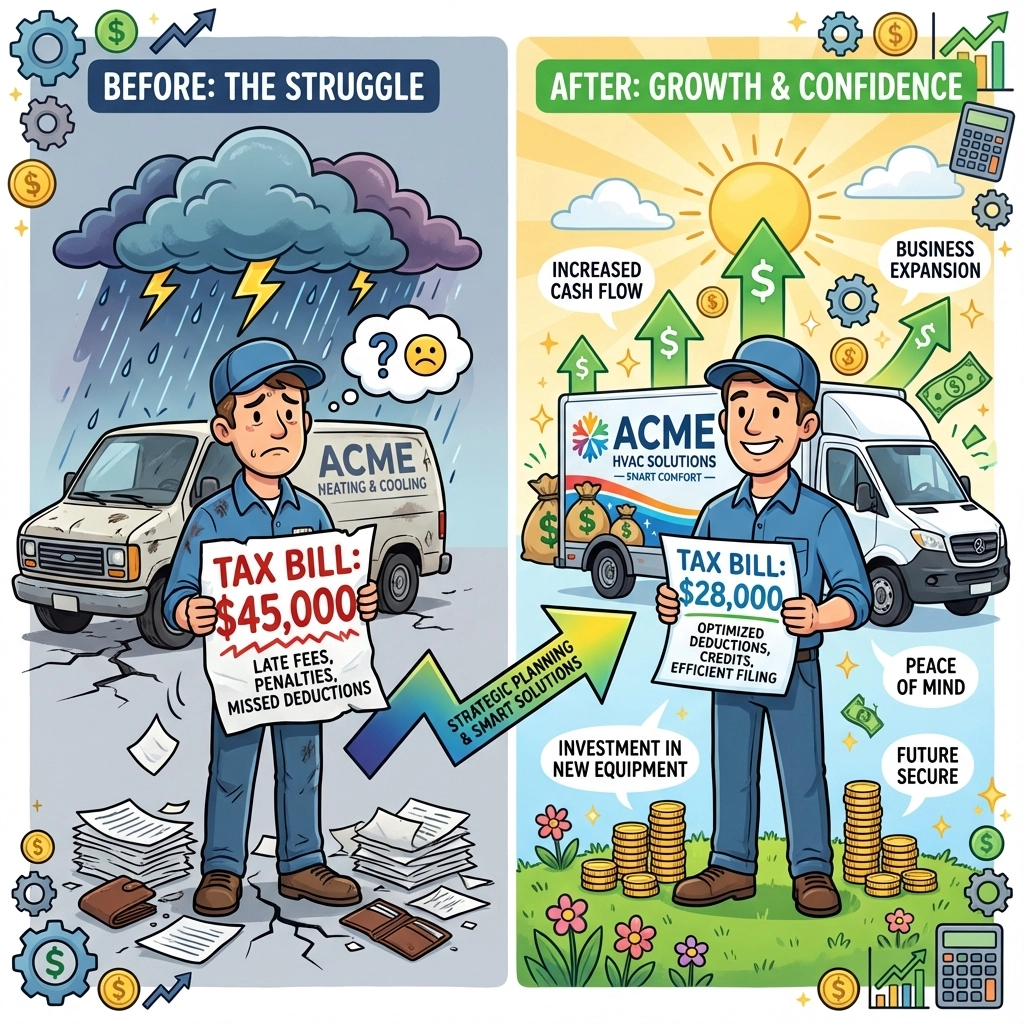
Let me share what this looks like in practice. One of our clients, a local HVAC company, was paying about $45,000 annually in taxes using the traditional approach. They'd gather their paperwork in March, file their return, and write a big check.
After switching to year-round tax planning, here's what changed:
Quarter 1: We identified equipment depreciation opportunities they were missing
Quarter 2: We restructured their owner compensation to optimize payroll taxes
Quarter 3: We planned a strategic equipment purchase to maximize Section 179 deductions
Quarter 4: We fine-tuned their estimated payments to avoid penalties
The result? Their tax bill dropped to $28,000: a $17,000 savings. But more importantly, they knew exactly what they'd owe months in advance, which improved their cash flow planning and reduced stress significantly.
Beyond the Tax Savings
While tax savings grab attention, year-round tax planning delivers benefits that go far beyond your April bill.
Better Business Decisions: When every major business decision includes tax planning input, you make smarter choices. That new location, equipment purchase, or hire doesn't just serve your business: it optimizes your tax position too.
Reduced Stress: No more March panic attacks. No more shoebox full of receipts. No more surprise tax bills. Business owners consistently report that year-round planning reduces their tax-related stress by 80% or more.
Strategic Growth Planning: Year-round tax planning integrates with your overall business strategy. Want to expand next year? Your tax professional can help structure that growth to minimize tax impact while maximizing cash flow.
How to Implement Year-Round Tax Planning
Making the switch doesn't require completely overhauling your current approach. Here's how most successful business owners implement year-round tax planning:
Start with Quarterly Check-ins: Instead of one annual meeting, schedule quarterly sessions with your tax professional. These 1-2 hour meetings review your financial position, upcoming opportunities, and potential strategies.
Integrate with Your Bookkeeping: Clean, current financial records make tax planning exponentially more effective. If you're still using shoeboxes and spreadsheets, consider upgrading to professional bookkeeping services that integrate with your tax planning.
Plan Major Decisions: Before making any significant business decision: equipment purchases, hiring, new locations: run it by your tax professional. A 10-minute conversation can save thousands in unnecessary taxes.
Monitor Tax Law Changes: Tax laws change constantly, and these changes create opportunities. Year-round planning ensures you're always current on new deductions, credits, and strategies.
The Integrated Approach
Here's the key insight: the most successful business owners don't choose between annual tax preparation and year-round planning: they do both. Annual tax preparation remains essential for meeting legal requirements and ensuring accuracy. But they've added year-round tax planning as a strategic business tool.
This integrated approach transforms tax management from a necessary evil into a competitive advantage. Instead of dreading tax season, you're using tax strategy to fuel business growth and maximize profitability.
The question isn't whether annual tax filings are dead: they're alive and well. The question is whether you're content with the bare minimum or ready to use tax planning as a strategic weapon for your business success.
If you're tired of surprise tax bills, missed opportunities, and reactive tax management, it might be time to explore what year-round tax planning can do for your business. The most successful business owners figured this out years ago. The only question is: how much longer do you want to wait?
Comments